Samarkand Itinerary for 3 Days
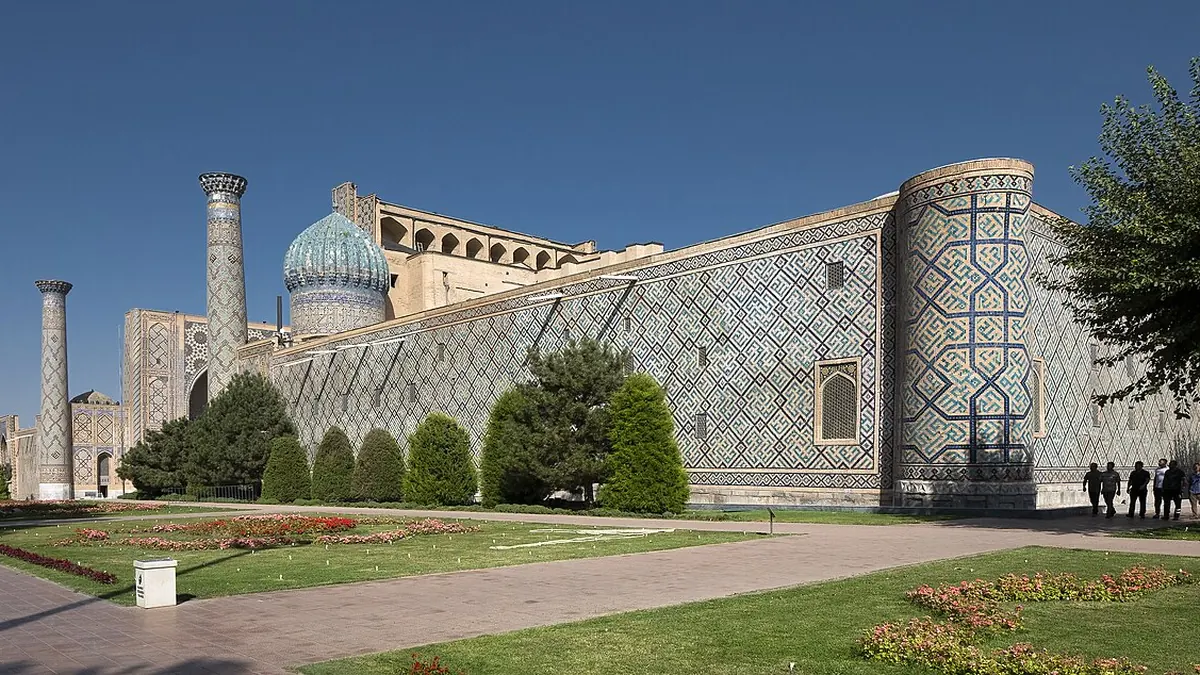
A Samarkand itinerary for 3 days covers Registan, Bibi-Khanym Mosque, Siyob Bazaar and Shah-i-Zinda on day one, Gur-e-Amir, the Ulugh Beg Observatory and Afrosiyab Museum on day two, and the Konigil paper mill or Shahrisabz on day three. For 2 days, merge day three into the first two.
In this guide
- What is the best Samarkand itinerary for 3 days?
- Day 1: How should you start in Samarkand?
- Day 2: Which sights make the best second day?
- What should you do on Day 3 in Samarkand?
- Should you combine Samarkand with Bukhara or Tashkent?
- When is the best time to visit Samarkand?
- What practical tips help with food, transport and money?
- What mistakes should you avoid in Samarkand?
What is the best Samarkand itinerary for 3 days?
The best 3-day Samarkand itinerary spends day one on Registan, Bibi-Khanym Mosque, Siyob Bazaar and Shah-i-Zinda, day two on Gur-e-Amir, the Ulugh Beg Observatory and the Afrosiyab Museum, and day three on the Konigil paper mill, quieter sights or a side trip.
| Day | Focus | Why it works |
|---|---|---|
| 1 | Registan Square, Bibi-Khanym Mosque, Siyob Bazaar, Shah-i-Zinda | The classic landmarks sit close together |
| 2 | Gur-e-Amir, Ulugh Beg Observatory, Afrosiyab Museum | Timurid history and science, with a calmer pace |
| 3 | Konigil paper mill and Meros workshops, Hazrat Khizr Mosque, or a day trip to Shahrisabz | Crafts, markets and flexibility |
How to shorten or extend it
- 2 days: do day one in full, then combine Gur-e-Amir and the Observatory on day two.
- 1 day: visit Registan, Gur-e-Amir and Shah-i-Zinda, with Siyob Bazaar for lunch.
- 4 or 5 days: add Shahrisabz and a slower neighborhood day, or continue to Bukhara by train.
Uzbekistan is a popular destination for travelers from Israel, but flight options and entry rules change. Check current routings and the official Uzbek entry requirements for Israeli passport holders, and read the Israeli National Security Council and Foreign Ministry guidance for your dates before booking.
Day 1: How should you start in Samarkand?
Start with Registan Square early in the morning, then walk to Bibi-Khanym Mosque and Siyob Bazaar, and end the day at Shah-i-Zinda in the late afternoon light.
Registan is a square framed by three madrasas, the Ulugh Beg, Sher-Dor and Tilya-Kori, and it is the symbol of Samarkand. Go early, when the crowds are thinner and the light on the tiles is best. Spend time inside the courtyards and look at the details of the tilework.
From there, walk to Bibi-Khanym Mosque, a monumental building commissioned by Timur, whose domes and portal dominate the skyline. Next to it, Siyob Bazaar is the main market, with bread, dried fruit, nuts, spices and fresh produce, and it is a good place for lunch and snacks.
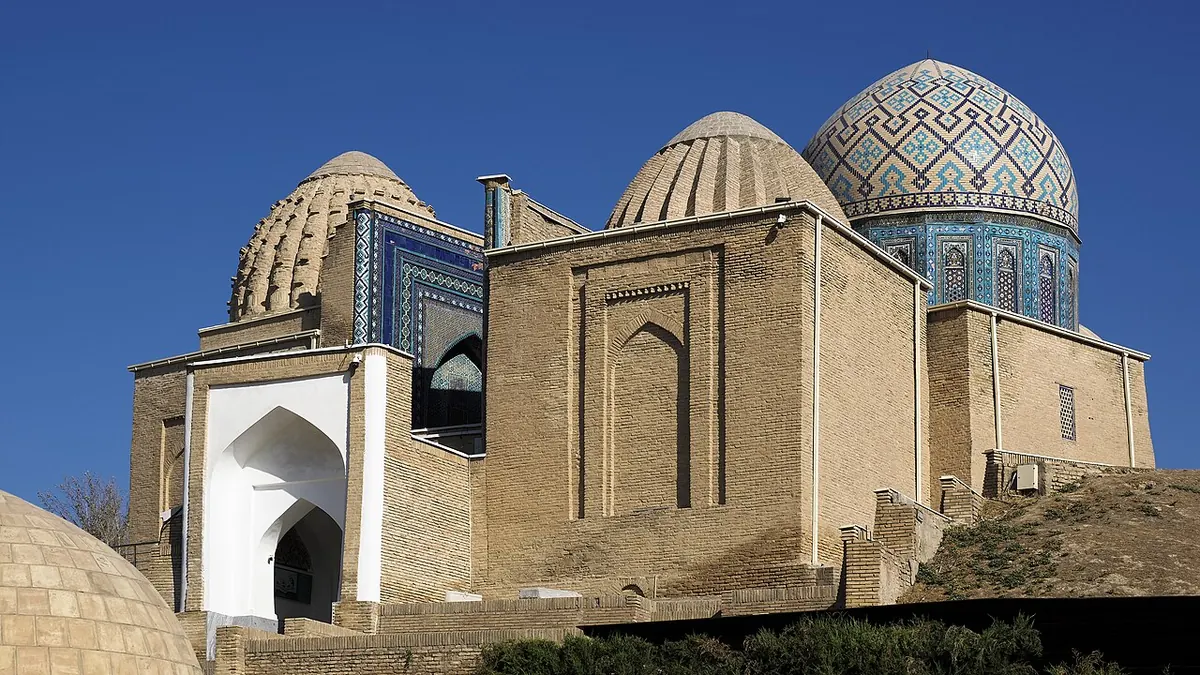
In the late afternoon, visit Shah-i-Zinda, an avenue of mausoleums with some of the finest blue tilework in Central Asia. It is a place of pilgrimage as well as sightseeing, so dress modestly and move quietly.
Day 2: Which sights make the best second day?
Day two is for Timur's mausoleum, Gur-e-Amir, followed by the Ulugh Beg Observatory and the Afrosiyab Museum, which explain the city's science and history.
Gur-e-Amir is the mausoleum of Timur (Tamerlane) and his descendants, with a ribbed blue dome and a richly decorated interior. Visit in the morning, when it is quieter. Then take a taxi to the Ulugh Beg Observatory on Chupan-Ata hill, where the astronomer-ruler Ulugh Beg built a large observatory in the 15th century. Only the underground part of the instrument survives, and a small museum explains his star catalog.
Nearby, the Afrosiyab Museum houses artifacts from the ancient city of Afrosiab, including the famous wall paintings from the 7th century. Plan a long lunch in the shade, and end with a walk through the old streets around Registan or a sunset tea.
- Morning: Gur-e-Amir.
- Midday: taxi to the Observatory and Afrosiyab Museum.
- Afternoon: relax at a tea house or return to Registan for a second look.
What should you do on Day 3 in Samarkand?
On day three, visit the Konigil paper mill and a craft workshop, or take a day trip to Shahrisabz if you want to see Timur's birthplace.
The Konigil Meros paper mill, in a village on the Siyob River a short drive from the center, makes traditional Samarkand paper from mulberry bark using water-powered methods, and visitors can watch the process. Back in town, you can see Hazrat Khizr Mosque and the surrounding cemetery hill, and shop for silk, ceramics and embroidery.
If you prefer a day trip, Shahrisabz, Timur's birthplace, is about a 1.5 to 2 hour drive over the mountain road, with the ruins of the Ak-Saray palace. Check road conditions and arrange a driver in advance.
Jewish heritage in Samarkand
Samarkand has been home to a Bukharan Jewish community for centuries. For Israeli visitors, contacting the local Jewish community or Chabad house before the trip is the best way to learn about the synagogue, the historic Jewish quarter and kosher food, since details change over time.
Should you combine Samarkand with Bukhara or Tashkent?
Yes. The easiest classic route is Tashkent, then Samarkand, then Bukhara by high-speed train, moving in one direction without backtracking.
The Afrosiyob high-speed train connects Tashkent and Samarkand in a little over two hours, and Samarkand and Bukhara in around an hour and a half, but check the current timetable and book seats early, especially in spring and autumn. Samarkand also has its own airport.
- Samarkand only: 2 to 3 nights is enough for a first visit.
- Samarkand and Bukhara: 4 to 5 nights in total.
- Tashkent and Samarkand: 3 to 4 nights for a short trip.
- Longer loop: add Khiva if you have more than a week.
Leave buffer time for train delays and station transfers, and keep one half-day flexible.
When is the best time to visit Samarkand?
The best times to visit Samarkand are spring (April to May) and autumn (September to October), when it is warm and dry, while midsummer is very hot and winter can be cold.
In July and August, daytime temperatures are very high, so start sightseeing at sunrise and rest in the afternoon. In winter, the city is quiet and cold, and snow is possible. Spring brings green landscapes and blossoms, and autumn is the harvest season with plenty of fruit in the bazaars. Check the dates of Muslim holidays such as Ramadan and Eid when planning, because opening hours and crowds can change.
What practical tips help with food, transport and money?
Use taxis or ride-hailing for the longer hops, walk within the historic core, and carry some cash as well as a card.
- Getting around: taxis or ride-hailing apps are cheap and practical between Registan, Shah-i-Zinda, Gur-e-Amir and the Observatory. The historic core near Registan is walkable.
- Food: expect plov, shashlik, samsa, soups, fresh bread and tea. Vegetarian options are available in most places but limited in traditional restaurants.
- Money: the local currency is the som. Cards are accepted in many hotels and restaurants, but carry cash for markets and small purchases. Check the exchange procedures before you travel.
- Dress: cover shoulders and knees at religious sites, and carry a light scarf.
- Kosher and Shabbat: check with the local Jewish community or Chabad house before you go, and plan to bring some supplies.
What mistakes should you avoid in Samarkand?
The biggest mistake is trying to see too many places in one day, which turns a beautiful city into a rushed checklist.
- Visiting at midday in summer: save the monuments for early morning and late afternoon.
- Skipping Shah-i-Zinda: it is often the most memorable single site.
- Not booking trains early: seats on popular Afrosiyob services can fill up.
- Jumping around the city: group by area: Registan and Bibi-Khanym, Gur-e-Amir, the Observatory and Afrosiyab.
- Rushing through Samarkand on the way to Bukhara: give it at least two nights.
With a slower pace, even a short visit feels rewarding, and the evening light on Registan is worth seeing at least once.
FAQ
How many days do you need in Samarkand?
Three days is a comfortable length for a first visit, covering Registan, Shah-i-Zinda, Gur-e-Amir, the Observatory and one craft or side trip. Two days is enough for the main sights, while one day works only as a highlights tour.
Is one day in Samarkand enough?
One day is enough for a quick overview if you focus on Registan, Gur-e-Amir and Shah-i-Zinda, with lunch at Siyob Bazaar. You will miss the Observatory, Afrosiyab Museum and the slower atmosphere, so two or three days is much better.
What is the best order for sightseeing in Samarkand?
Group sights by area. Begin with Registan, Bibi-Khanym Mosque, Siyob Bazaar and Shah-i-Zinda on one day. Then visit Gur-e-Amir, the Ulugh Beg Observatory and Afrosiyab Museum on another, and keep crafts or a day trip for the last day.
Can you combine Samarkand and Bukhara in one trip?
Yes. The two cities are linked by the Afrosiyob high-speed train, and many travelers go from Tashkent to Samarkand and then to Bukhara. Check the current timetable and book seats early, and allow at least two nights in Samarkand.
What is the best time to visit Samarkand?
Spring (April to May) and autumn (September to October) are the best, with warm, dry weather. Summer is very hot, so sightsee early and late. Winter is cold and quiet. Check Muslim holiday dates, as they can affect crowds and opening hours.
What should Israeli travelers check before going to Samarkand?
Check current flight options, the official Uzbek entry rules for Israeli passport holders, and the Israeli National Security Council and Foreign Ministry guidance. Book trains early, and contact the local Jewish community or Chabad house about kosher food and Shabbat.