Santiago, Chile Itinerary for 3 Days
A Santiago, Chile itinerary for 3 days covers the historic center on day 1, Cerro San Cristobal with Bellavista and Lastarria on day 2, and a day trip to Valparaiso or a wine valley on day 3. For 1 or 2 days, keep the first two days and skip the excursion.
In this guide
- What is the best Santiago, Chile itinerary for 3 days?
- What should you do on day 1 in the historic center?
- What should you do on day 2: Cerro San Cristobal, Bellavista, and Lastarria?
- Should you take a day trip on day 3 or stay in Santiago?
- Where should you stay in Santiago?
- How do you get around Santiago and what should you watch out for?
- When is the best time to visit Santiago, and what should Israeli travelers know?
What is the best Santiago, Chile itinerary for 3 days?
The best 3-day Santiago itinerary is the historic center on day 1, Cerro San Cristobal with Lastarria and Bellavista on day 2, and a day trip to Valparaiso or a wine valley on day 3. If you prefer to stay in the city, replace day 3 with markets, museums, and the Providencia district.
| Day | Area | Main stops |
|---|---|---|
| Day 1 | Centro | Plaza de Armas, Metropolitan Cathedral, Museo Chileno de Arte Precolombino, La Moneda, Cerro Santa Lucia |
| Day 2 | Bellavista and Lastarria | Parque Metropolitano de Santiago (Cerro San Cristobal), La Chascona, Bellavista, Parque Forestal, Lastarria |
| Day 3 | Valparaiso or wine country | Valparaiso hills and port, or a vineyard visit in the Maipo Valley. Alternative: Mercado Central, Providencia, Costanera Center view |
Santiago is easy to fly into from Israel with one connection, often through Europe or another hub. There are no simple routes, so check current schedules and allow a rest period on arrival after the long journey. Keep day 1 light.
If you have 1 or 2 days
With 2 days, do days 1 and 2 as written and skip the day trip. With 1 day, take the Metro to Plaza de Armas, walk to La Moneda, go up Cerro Santa Lucia, and finish in Lastarria or Bellavista for dinner.
What should you do on day 1 in the historic center?
On day 1, walk the historic center from Plaza de Armas to La Moneda, with stops at the Metropolitan Cathedral, one museum, and the viewpoint at Cerro Santa Lucia. The center is flat and compact, so it is the easiest first day after a long flight.
- Plaza de Armas: the main square, with the Metropolitan Cathedral and the Correo Central (the old post office building) on its edges.
- Museo Chileno de Arte Precolombino: a small, well-regarded museum a block away that covers Andean and Mesoamerican cultures. It is a good choice if you want one museum.
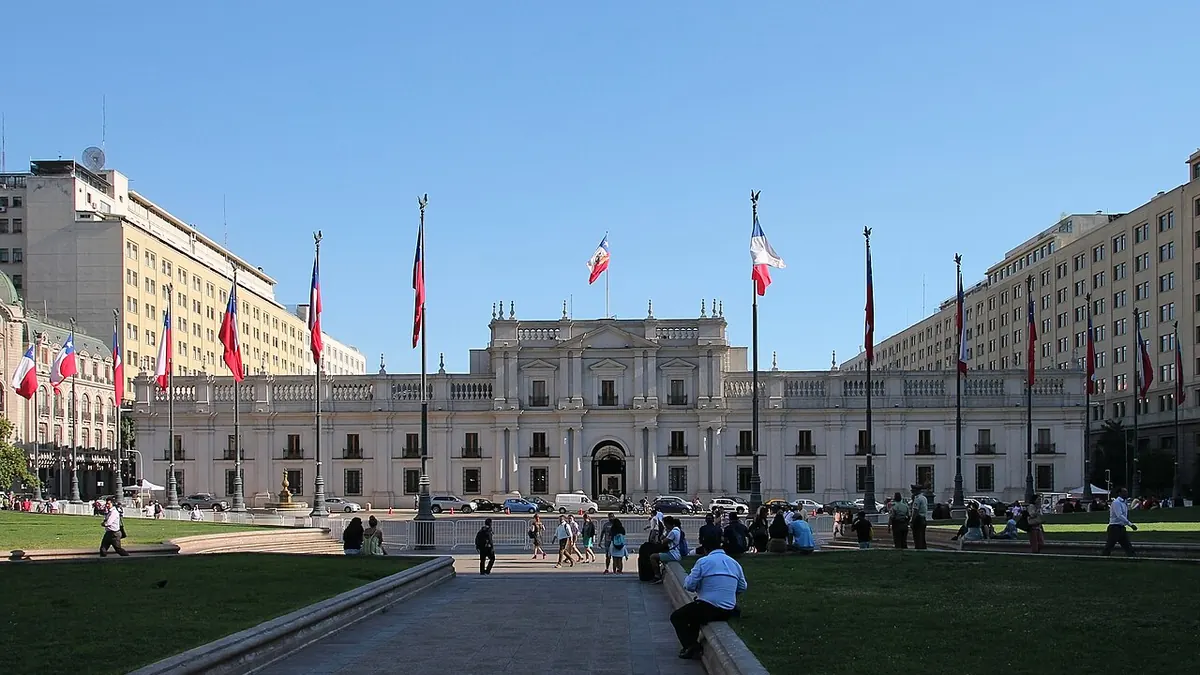
- La Moneda: the presidential palace. The square in front is open to walk in. The underground Centro Cultural La Moneda has exhibitions and a cafe.
- Cerro Santa Lucia: a small hill with stairs, gardens, and city views, right between the center and Lastarria. Good for the late afternoon.
- Lunch: Mercado Central is known for its seafood, though some restaurants inside target tourists. Look for places busy with locals.
The Museo de la Memoria y los Derechos Humanos, in the Quinta Normal area, is a serious and moving museum about the dictatorship years. It is worth the trip if you have time, but it is not a light stop, so consider it on a different day or instead of another museum.
What should you do on day 2: Cerro San Cristobal, Bellavista, and Lastarria?
Spend day 2 on views, parks, and neighborhoods: go up Cerro San Cristobal in the morning, visit La Chascona in Bellavista, and walk through Parque Forestal into Lastarria for the afternoon and dinner. These areas are close to each other, so you can move on foot or by short taxi.
Morning: Cerro San Cristobal
Cerro San Cristobal is part of the Parque Metropolitano. A funicular starts from Bellavista, and the summit has a statue of the Virgin Mary and wide views of the city and, on a clear day, the Andes. Go early for clearer air and cooler weather. Check whether the funicular and the cable car are operating before you go, as maintenance closures happen. You can also hike up if you prefer.
Midday: Bellavista
Bellavista is known for street art, restaurants, and La Chascona, one of the houses of the poet Pablo Neruda. Tours of the house are usually by advance booking, so check availability. Patio Bellavista is a courtyard with restaurants and shops.
Afternoon and evening: Parque Forestal and Lastarria
Cross the Mapocho River to Parque Forestal, where the Museo Nacional de Bellas Artes sits, and continue to Barrio Lastarria for cafes, bookshops, and small galleries. The Gabriela Mistral Cultural Center (GAM) is nearby. Lastarria is a pleasant place to stay for dinner, as the streets are lively but relaxed.
Should you take a day trip on day 3 or stay in Santiago?
For a first visit, a day trip to Valparaiso is the most popular day 3, but if you are tired or have a late flight, staying in Santiago is the lower-stress choice. Choose a wine-valley visit if wine matters more to you than the coast.
| Option | Time from Santiago | Best for | Trade-off |
|---|---|---|---|
| Valparaiso and Vina del Mar | About 1.5 to 2 hours each way by bus | Colorful hillside streets, funiculars, the port, the coast | Long day; leave early and expect crowds on weekends |
| Wine valley (Maipo, Casablanca) | About 1 to 1.5 hours each way | Tastings, scenery, a relaxed pace | Usually requires a tour or driver; reserve ahead |
| Stay in Santiago | None | Mercado Central, La Vega, Providencia, rest | Fewer new experiences |
Valparaiso is a UNESCO World Heritage city, with steep hills, old funiculars called ascensores, murals, and a busy port. Wear comfortable shoes, because the streets climb and the cobbles are uneven. In winter (June to August), the Andes day trips and ski areas near Santiago, such as Valle Nevado, are alternatives, but they depend on snow and road conditions.
Where should you stay in Santiago?
The best areas to stay in Santiago for a short visit are Lastarria and Barrio Italia for charm and walkability, Providencia for a quieter, safer-feeling base with good Metro access, and the center if you want to be close to the main sights. Las Condes is more business-oriented.
- Lastarria and Bellas Artes: walkable to the center, parks, cafes, and restaurants; the best choice for first-timers.
- Providencia: residential and leafy, with Metro Line 1, shopping, and the Costanera Center area. It is convenient for the airport bus and day trips.
- Centro: convenient for sightseeing during the day, but quieter and less appealing in the evening.
- Bellavista: lively at night, close to the hill, and a bit noisier.
The airport (SCL) is about 30 to 45 minutes from the center by road, depending on traffic. Airport buses run to stops near Metro stations, and taxis or ride-hailing are options for door-to-door transfers.
How do you get around Santiago and what should you watch out for?
You get around Santiago mainly by Metro, on foot between nearby neighborhoods, and by taxi or ride-hailing in the evening. The Metro is clean and efficient and covers most places in this itinerary, and you will need a rechargeable Bip! card, or check if contactless payment is currently accepted.
- Metro stops to know: Universidad de Chile and Plaza de Armas for the center, Santa Lucia for Lastarria, and Baquedano for Bellavista and Parque Forestal.
- Avoid rush hours: the Metro and roads are crowded in the early morning and early evening.
- Petty theft: pickpocketing and phone snatching occur in crowded places like Plaza de Armas, the Metro, and tourist areas. Keep valuables close, avoid using your phone near curbs, and do not leave bags unattended.
- Do not stack distant sights: Santiago is bigger than it looks on a map. Group stops by area.
- Air quality: in winter, smog can limit views from the hills. Clear days after rain give the best Andes views.
- Earthquakes: Chile is seismically active. Follow local guidance and your hotel's instructions if something happens.
Plan restaurant dinners for later than you are used to, since many locals eat after 8 p.m., and check opening days for museums, as many close on Mondays.
When is the best time to visit Santiago, and what should Israeli travelers know?
The best time to visit Santiago is spring (September to November) or autumn (March to May), when days are mild and the Andes are visible. Santiago is in the Southern Hemisphere, so summer runs December to February and is hot and dry, while winter runs June to August and is cool.
- Entry rules: check the requirements for your passport on official Chilean government pages before you book.
- Travel guidance: review the latest Israeli National Security Council (NSC) and Foreign Ministry advisories for Chile before you fly and again before departure.
- Flights: there is no reliable simple route from Tel Aviv, so compare connections and check current schedules. Allow a day to recover from jet lag if possible.
- Kosher and Shabbat: check with the local Jewish community or a Chabad house before the trip. Do not assume options near your hotel, and plan Shabbat accommodation in advance.
- Money: cards are widely accepted in the city; carry a little cash in Chilean pesos for small shops and markets.
Pack layers, sunscreen, and a hat. Sun at this altitude (the city lies at roughly 520 meters) is strong even on cool days.
FAQ
Can I see Santiago in 1 day?
Only the highlights. Take the Metro to Plaza de Armas, walk to La Moneda, climb Cerro Santa Lucia, and finish in Lastarria or Bellavista for dinner. It works for a stopover but feels rushed if you want museums, views, and a relaxed meal.
Is 2 days enough for Santiago?
Two days is enough for a solid first impression: the historic center on one day, and Cerro San Cristobal, Bellavista, and Lastarria on the other. You will miss day trips such as Valparaiso or the wine valleys, which need a third day.
Is Valparaiso worth a day trip from Santiago?
Yes, if you enjoy colorful hillside streets, murals, and the port. It takes about 1.5 to 2 hours each way, so start early. If you prefer museums and neighborhoods, staying in Santiago is a better use of your third day.
Which neighborhood is best to stay in for a short trip?
Lastarria and the Bellas Artes area are the best choices for first-timers because they are walkable and central. Providencia is a calmer alternative with good Metro access. Both are close to the sights in this itinerary.
Is Santiago easy to explore without a car?
Yes. The Metro, walking, and occasional taxis or ride-hailing cover everything in this itinerary. A car is more trouble than help in the city because of traffic and parking, though it can be useful for a wine-valley trip.
What is the best time to visit Santiago?
Spring (September to November) and autumn (March to May) are the best, with mild weather and clear mountain views. Summer from December to February is hot and dry, and winter from June to August is cool with occasional smog and rain.