Tbilisi Itinerary for 5 Days (and How to Stretch It to 7)
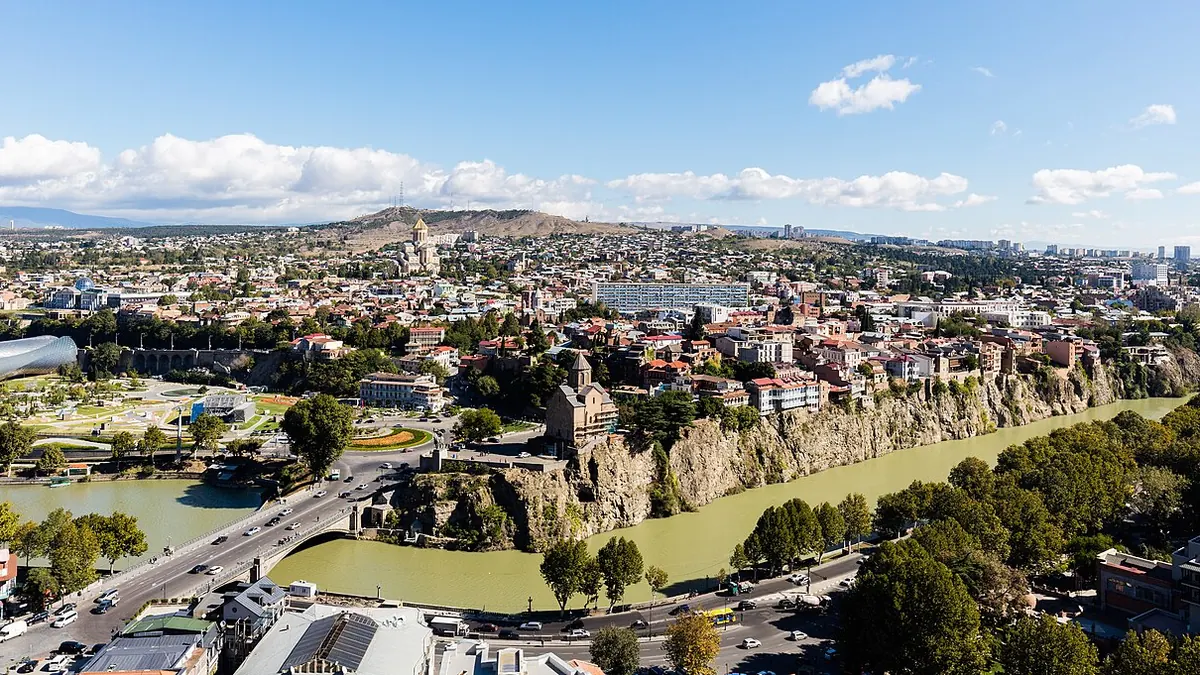
A Tbilisi itinerary for 5 days should spend two days in the city, covering the Old Town, sulfur baths, Narikala Fortress and Rustaveli Avenue, then three day trips: Mtskheta, Kazbegi along the Georgian Military Road, and the Kakheti wine region. For 7 days, sleep one night in Kazbegi and one in Sighnaghi.
In this guide
What is the best Tbilisi itinerary for 5 days?
The best 5-day Tbilisi itinerary gives two full days to the city itself and uses the other three for the classic day trips: the ancient capital of Mtskheta, the mountains of Kazbegi and the vineyards of Kakheti. You stay in one hotel the whole time, and every day is different.
Tbilisi is one of the easiest short-haul destinations from Israel. The flight from Ben Gurion takes around two and a half hours, direct flights have been offered by several airlines (check current schedules), and Israeli passport holders can visit Georgia without a visa. The city combines a hilly old town with wooden balconies and sulfur baths, Soviet-era avenues, a lively café scene and some of the best food and wine in the region.
Five days at a glance
| Day | Focus | Main stops |
|---|---|---|
| 1 | Old Tbilisi | Metekhi Church, Bridge of Peace, Rike Park, cable car to Narikala Fortress, Mother of Georgia statue, Abanotubani sulfur baths |
| 2 | Central Tbilisi | Sioni Cathedral, the Great Synagogue, Gabriadze Theatre clock tower, Rustaveli Avenue, Georgian National Museum, funicular to Mtatsminda Park |
| 3 | Mtskheta and Uplistsikhe | Jvari Monastery, Svetitskhoveli Cathedral, the cave town of Uplistsikhe |
| 4 | Kazbegi | Georgian Military Road, Ananuri Fortress, Gudauri viewpoint, Gergeti Trinity Church |
| 5 | Kakheti | Bodbe Monastery, the hilltop town of Sighnaghi, a winery visit |
Days 1–2: What to see in Tbilisi itself
Two city days are enough to see Tbilisi's main sights on foot, with one day in the old town and one in the center.
Day 1: Old Tbilisi, Narikala and the baths
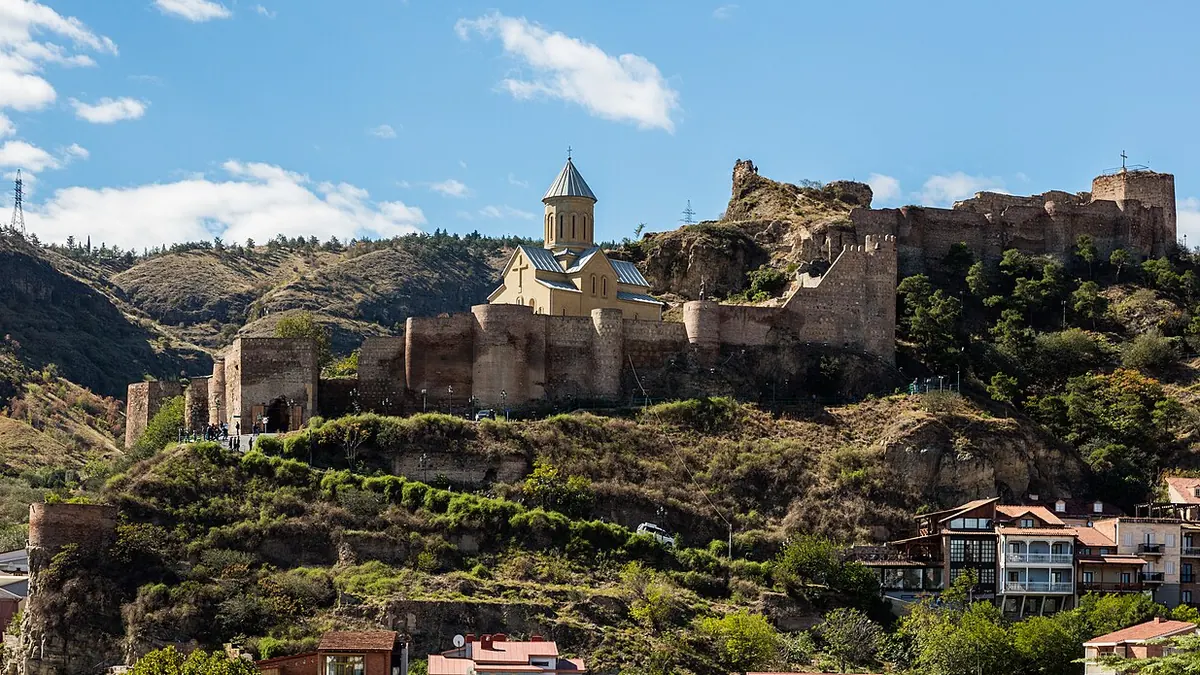
Start on the left bank at Metekhi Church, perched on a cliff above the Mtkvari River, then cross the glass Bridge of Peace into Rike Park. Ride the cable car up to Narikala Fortress for the best view of the city, and walk along the ridge to the aluminum Kartlis Deda (Mother of Georgia) statue. Walk down through the Botanical Garden or the lanes above the Leghvtakhevi gorge to Abanotubani, the domed sulfur bath district. Book a private room in one of the bathhouses for the evening; it is the most Tbilisi experience there is.
Day 2: Synagogue, Rustaveli and Mtatsminda
Begin at Sioni Cathedral, then visit the Great Synagogue of Tbilisi in the old town, a reminder of more than two millennia of Jewish life in Georgia, which many Israelis of Georgian origin trace their roots to. Stop at the leaning clock tower of the Gabriadze Theatre and the Anchiskhati Basilica, the oldest church in the city. In the afternoon, walk Rustaveli Avenue past the Parliament and the Opera House, visit the Georgian National Museum, and take the funicular up to Mtatsminda Park for sunset.
If you have extra time in the city, add the Dry Bridge flea market, the converted Soviet factory Fabrika in the Marjanishvili area, or Holy Trinity Cathedral (Sameba), one of the largest Orthodox cathedrals in the region.
Which day trips from Tbilisi are best?
The three best day trips from Tbilisi are Mtskheta for history, Kazbegi for mountain scenery and Kakheti for wine; they fill days three to five of this plan.
Day 3: Mtskheta and Uplistsikhe
Mtskheta, Georgia's ancient capital and a UNESCO World Heritage site, is only about half an hour from the city. See Jvari Monastery on its hilltop above the confluence of two rivers, then Svetitskhoveli Cathedral, the spiritual heart of the Georgian Orthodox Church. Continue west to Uplistsikhe, a cave town carved into the rock, often combined with a stop in Gori.
Day 4: Kazbegi and the Georgian Military Road
The drive north along the Georgian Military Road takes around three hours each way, so start early. Stop at Ananuri Fortress on the Zhinvali reservoir and the Soviet-era friendship monument viewpoint near Gudauri, then continue to Stepantsminda (Kazbegi). Hike or take a 4x4 up to Gergeti Trinity Church, framed by Mount Kazbek on a clear day. In winter, snow can close the pass, so keep this day flexible.
Day 5: Kakheti wine region
Kakheti, east of Tbilisi, is the heartland of Georgian winemaking and the traditional qvevri clay-jar method. Visit Bodbe Monastery, walk the walls of the hilltop town of Sighnaghi with views over the Alazani Valley, and end with a tasting at a family winery. Drivers can easily be hired for the day, and most tours include lunch.
How do you turn it into a 7-day Tbilisi itinerary?
To turn this into a 7-day Tbilisi itinerary, replace the two long day trips with overnight stays in Kazbegi and Sighnaghi, and add a third day in the city.
| Day | Plan | Overnight |
|---|---|---|
| 1–2 | Old Tbilisi, baths, Rustaveli Avenue, Mtatsminda | Tbilisi |
| 3 | Mtskheta, then along the Georgian Military Road to Stepantsminda | Kazbegi |
| 4 | Gergeti Trinity Church at sunrise, a hike toward the Gergeti Glacier or into Truso or Juta valleys (season permitting), return to Tbilisi | Tbilisi |
| 5 | Drive to Kakheti, Bodbe Monastery, Sighnaghi, sunset over the Alazani Valley | Sighnaghi |
| 6 | Wineries around Telavi or Kvareli, return to Tbilisi | Tbilisi |
| 7 | Dry Bridge market, Fabrika, a last bath or dinner, departure | — |
History enthusiasts can swap one Kakheti day for David Gareja, a cave monastery complex in the semi-desert southeast of Tbilisi, or for Uplistsikhe and Gori.
When is the best time to visit Tbilisi?
The best time to visit Tbilisi for a mix of city and day trips is May to June or September to October, when the weather is warm but not hot and mountain roads are open.
| Season | Tbilisi | Day trips |
|---|---|---|
| Spring (April–June) | Mild, green, some rain | Kazbegi snow melts; high trails open later |
| Summer (July–August) | Hot in the city | Ideal for the mountains |
| Autumn (September–October) | Warm and pleasant | Grape harvest (rtveli) in Kakheti |
| Winter (November–March) | Cold, sometimes snowy | Kazbegi road can close; skiing in Gudauri |
Autumn fits Sukkot nicely, and the Passover period usually brings comfortable spring weather in the city.
Practical tips for travelers from Israel
The most useful tips cover entry, money, getting around and kosher food.
- Entry: Israeli passport holders can visit Georgia visa-free. Georgia has introduced a travel health insurance requirement for foreign visitors, so check current rules on official Georgian government sources, and read the Israeli National Security Council (NSC) and Foreign Ministry advisories. Do not attempt to enter the occupied regions of Abkhazia or South Ossetia.
- Money: the currency is the Georgian lari. Cards are widely accepted in the city, but carry cash for markets, small villages and some drivers.
- Getting around: walk in the old town, use the metro or ride-hailing apps such as Bolt for longer distances, and hire a driver or join a tour for day trips. Driving on mountain roads requires care.
- Where to stay: Old Tbilisi and Sololaki for atmosphere; the Rustaveli and Vera areas for quieter streets and good transport.
- Kosher and Shabbat: Tbilisi has a historic Jewish community; check with the local Jewish community or Chabad house about kosher food and Shabbat arrangements before you travel.
- Food: Georgian cuisine is rich in vegetarian dishes such as pkhali, badrijani with walnuts and lobio, alongside khachapuri and khinkali.
Common mistakes on a Tbilisi itinerary
The most common mistake is underestimating how long the mountain drive to Kazbegi takes and squeezing it into a day with other stops.
- Booking Kazbegi without checking the weather. Clouds hide Mount Kazbek, and snow can close the road in winter.
- Wearing the wrong shoes. Old Tbilisi is steep and cobbled.
- Skipping the sulfur baths. Book a private room ahead, especially on weekends.
- Combining a winery day with driving yourself. Tastings and mountain roads do not mix; hire a driver.
- Planning the synagogue visit for Shabbat as a tourist. Sightseeing visits are better on a weekday.
FAQ
Is 5 days enough for Tbilisi?
Five days is ideal for a first visit to Tbilisi. Two days cover the Old Town, sulfur baths, Narikala Fortress and Rustaveli Avenue, while the other three allow day trips to Mtskheta, the mountains of Kazbegi and the Kakheti wine region, all without changing hotels.
What can you add with 7 days in Georgia?
With seven days, sleep one night in Stepantsminda to see Gergeti Trinity Church at sunrise and hike in the surrounding valleys, and one night in Sighnaghi to explore Kakheti's wineries at a slower pace. Add a third city day for Fabrika and the Dry Bridge market.
Is Kazbegi doable as a day trip from Tbilisi?
Kazbegi is doable as a long day trip, since the drive along the Georgian Military Road takes about three hours each way with stops at Ananuri and Gudauri. An overnight stay is more relaxing and gives you a better chance of clear mountain views.
Do Israelis need a visa for Georgia?
Israeli passport holders do not need a visa to visit Georgia as tourists. Georgia has introduced a travel health insurance requirement for foreign visitors, so check current entry rules on official sources and read Israeli travel advisories before booking your trip.
Where should I stay in Tbilisi?
First-time visitors usually stay in Old Tbilisi or Sololaki, close to the baths, the cable car and many restaurants. The areas around Rustaveli Avenue and Vera are quieter and well connected by metro, which suits travelers who prefer calmer evenings after busy days.
When is the best time to visit Tbilisi?
May to June and September to October are the most pleasant months in Tbilisi, with mild weather in the city and open mountain roads. Summer is hot in the capital but ideal for Kazbegi, and autumn brings the grape harvest in Kakheti.