Johannesburg Itinerary for 10 Days

A Johannesburg itinerary for 10 days works best as four days in Johannesburg, three on safari near Kruger, and three in Cape Town. Johannesburg itself fits into about four days: the Apartheid Museum, Constitution Hill, Soweto, Maboneng, and a Cradle of Humankind day trip. Fly between regions to save time.
In this guide
- What is the best Johannesburg itinerary for 10 days?
- Johannesburg itinerary for 10 days: what is the day-by-day plan?
- What is a good Johannesburg itinerary for 4 days?
- How do you fit Cape Town and a safari into a Johannesburg trip?
- How do you get around Johannesburg safely?
- What mistakes should you avoid on a Johannesburg itinerary?
- What do Israeli travelers need to check before going to South Africa?
What is the best Johannesburg itinerary for 10 days?
The best 10-day Johannesburg itinerary spends about 4 days in the city and Soweto, adds a safari in the Kruger region, and ends with 3 days in Cape Town.
Johannesburg is rarely worth 10 full days on its own. Its strongest sights, which are the Apartheid Museum, Constitution Hill, Soweto, and the Maboneng and Braamfontein districts, fit comfortably into three or four days. The rest of your time is better spent on wildlife and scenery elsewhere in South Africa, with Johannesburg (O. R. Tambo International Airport) as the arrival point.
How to scale the plan
- 4 days: the Johannesburg core plan below, with no onward leg.
- 10 days: Johannesburg (4 days), a Kruger safari (3 days), and Cape Town (3 days).
- Shorter on the coast: swap Cape Town for the Panorama Route in Mpumalanga if you prefer a road trip.
Cape Town is a short domestic flight from Johannesburg (about 2 hours), so it is the practical way to connect the two. Driving the same route takes well over a full day and is not worth it for most visitors.
Johannesburg itinerary for 10 days: what is the day-by-day plan?
A 10-day plan runs Johannesburg for days 1 to 4, a safari near Kruger National Park for days 5 to 7, and Cape Town for days 8 to 10.
| Day | Plan | Notes |
|---|---|---|
| 1 | Arrive, Rosebank or Sandton | Easy first evening near your hotel; rest after the flight from Tel Aviv |
| 2 | Apartheid Museum and Constitution Hill | The best introduction to South Africa's recent history |
| 3 | Soweto | Guided tour: Vilakazi Street, Hector Pieterson Memorial and Museum |
| 4 | Maboneng, Braamfontein, or Cradle of Humankind | Urban art and cafes, or fossil sites about an hour from the city |
| 5 | Fly toward Kruger | Domestic flight to a Kruger-area airport, then transfer to a lodge |
| 6 | Safari | Early and late game drives |
| 7 | Safari and return | Morning drive, then fly back via Johannesburg or direct onward |
| 8 | Fly to Cape Town | Waterfront and Bo-Kaap |
| 9 | Table Mountain and Cape Peninsula | Cable car in clear weather, Boulders Beach, Cape Point |
| 10 | Winelands or last morning in Cape Town | Stellenbosch or Franschhoek, then your flight home |
If you only have 4 days, use days 1 to 4 and add Pretoria or the Cradle of Humankind on day 4. Flight schedules and seasons matter, so book domestic flights and safari lodges well in advance.
What is a good Johannesburg itinerary for 4 days?
A good 4-day Johannesburg itinerary covers the Apartheid Museum and Constitution Hill, Soweto, Maboneng and Braamfontein, and a day trip to the Cradle of Humankind or Pretoria.
- Day 1: Apartheid Museum in the morning, then Constitution Hill (the former prison complex that now houses the Constitutional Court) and the Braamfontein cafes. Visit the Neighbourhood Goods Market on a Saturday if your dates allow.
- Day 2: A guided Soweto tour, including Vilakazi Street and the Hector Pieterson Memorial. A local guide makes the day easier and adds context.
- Day 3: Maboneng, with galleries, street art, and food markets, plus a quiet afternoon in Rosebank or Melrose Arch.
- Day 4: Day trip to the Cradle of Humankind (a UNESCO World Heritage Site with the Maropeng visitor center and Sterkfontein Caves), or to Pretoria for the Union Buildings and the Voortrekker Monument.
With 3 days, drop the day trip. With 2 days, combine the Apartheid Museum with Soweto and Constitution Hill with Maboneng.
How do you fit Cape Town and a safari into a Johannesburg trip?
Fly between Johannesburg, the Kruger area, and Cape Town, because South Africa is large and road transfers eat days.
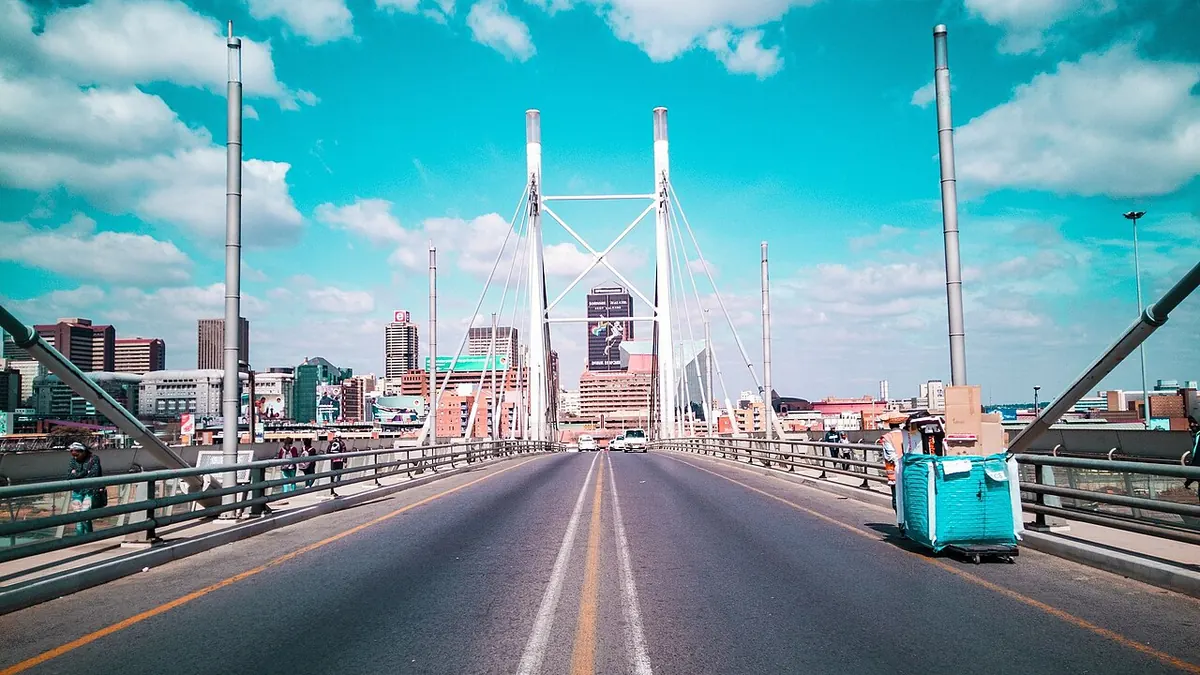
Many travelers add a Kruger or private reserve stay because it is the most accessible Big Five area from Johannesburg. Some reserves lie within a few hours' drive, while others require a short domestic flight. Pilanesberg National Park, about 2.5 hours from Johannesburg, is a simpler option if you only have a weekend. Then fly to Cape Town for Table Mountain, Cape Point, Boulders Beach, and the winelands.
The Panorama Route in Mpumalanga, with Blyde River Canyon, God's Window, and Bourke's Luck Potholes, is a scenic alternative to Cape Town. It takes roughly 4 to 5 hours by road from Johannesburg and works best as a 2 to 3 day loop combined with Kruger.
Seasons are reversed from Israel: South Africa's winter runs from June to August, when Johannesburg is dry and sunny but cold at night. The best wildlife viewing is in the dry winter months, and Cape Town is best from November to March.
How do you get around Johannesburg safely?
Use pre-arranged transfers, ride-hailing, or a guided tour for most sightseeing, and avoid walking between neighborhoods or driving at night in unfamiliar areas.
Johannesburg is spread out, so distances are longer than they look on a map. For most visitors, Sandton, Rosebank, and Melrose Arch are the easiest and most comfortable bases, while the inner city is better as a place to visit with a guide than as a base. Plan around traffic, especially in the morning and evening peaks.
- Choose one base area and cluster nearby sights.
- Use ride-hailing apps or hotel transfers, especially after dark.
- Keep phones and cameras out of sight in busy streets, and do not leave valuables in a parked car.
- Take a guided tour for Soweto and the inner city.
- Ask your hotel for current local advice on specific neighborhoods.
Self-driving works well for day trips, but unfamiliar roads and city traffic can slow you down.
What mistakes should you avoid on a Johannesburg itinerary?
The most common mistakes are trying to do too much, underestimating traffic, and treating Johannesburg as only a transit stop.
Many first-time visitors skip the city's history and miss its strongest value. If you leave out Soweto, the Apartheid Museum, or Constitution Hill, the trip can feel disconnected from South Africa's story. Others plan a Cape Town road trip when a short flight is a far better use of time.
- Do not overpack a day. One main area per day is enough.
- Do not ignore logistics. Transfers between Sandton, Rosebank, the inner city, and Soweto can take 30 to 60 minutes or more.
- Do not skip a guide for Soweto. It adds context and safety.
- Do not forget to book ahead. Popular lodges and Table Mountain cable car slots fill quickly in peak months.
What do Israeli travelers need to check before going to South Africa?
Check the entry rules, the latest Israeli travel guidance, and your flight options well before you book, because they can change.
Israeli passport holders have usually not needed a visa for short tourist stays in South Africa, but confirm current rules on the official South African government website. Read the latest travel warning from Israel's National Security Council (NSC) and Ministry of Foreign Affairs for South Africa, and keep an eye on the political climate. Do not assume a direct flight from Tel Aviv on your dates; check current airline schedules, as many itineraries connect through Europe, Addis Ababa, or Istanbul.
Johannesburg has a sizable Jewish community, with kosher services centered in suburbs such as Glenhazel and Sandton. For kosher food or Shabbat arrangements, ask the local Jewish community or Chabad house before you travel. Remember that South African malaria zones, including the Kruger region, may require malaria prophylaxis; consult a travel clinic in Israel before your trip.
FAQ
Is 10 days too long for Johannesburg?
For Johannesburg alone, 10 days is too long. The main sights fit into three or four days. Most travelers use the rest of the time for a safari near Kruger or Pilanesberg and a few days in Cape Town, which makes a far richer South Africa itinerary.
How many days do you need in Johannesburg?
Three to four days is enough for the Apartheid Museum, Constitution Hill, Soweto, Maboneng, and one day trip such as the Cradle of Humankind or Pretoria. Two days is possible if you focus on the Apartheid Museum and a guided Soweto tour.
What should I see first in Johannesburg?
Start with the Apartheid Museum and Constitution Hill for historical context, then take a guided Soweto tour. Add Maboneng or Braamfontein for street art, food, and modern city life. This order gives a balanced picture of the city's past and present.
Is Johannesburg safe for visitors?
Johannesburg requires normal big-city caution. Use reliable transport, avoid walking in unfamiliar areas, especially after dark, keep valuables out of sight, and take guided tours for Soweto and the inner city. Check current Israeli and local advice and ask your hotel about specific neighborhoods.
How do I combine Johannesburg with Cape Town?
Fly between the cities, which takes about two hours, rather than driving. A common plan is four days in Johannesburg, three on safari, and three in Cape Town. Book domestic flights early, particularly in the December to January peak season.
Do Israelis need a visa for South Africa?
Israeli passport holders have generally been able to enter South Africa for short tourist stays without a visa, but rules change. Check the official South African government site and the Israeli National Security Council and Foreign Ministry guidance before you book, and confirm flight options from Tel Aviv.