Kruger Self-Drive Itinerary: A Practical 5-Day Plan

A Kruger self-drive itinerary for 5 days runs from Crocodile Bridge to Lower Sabie, Skukuza and Satara, exiting at Orpen. It covers the river wildlife of the south and the lion country of the central plains. Book camps through SANParks; the dry season, roughly May to September, is best.
In this guide
- What is the best Kruger self-drive itinerary for 5 days?
- How do you book a self-drive trip in Kruger?
- Where should you stay: Satara, Lower Sabie or Skukuza?
- How should you structure each game-drive day?
- What rules and safety points apply when driving in Kruger?
- When is the best time of year for self-drive in Kruger?
- How do you reach Kruger from Israel?
- What are common mistakes on a Kruger self-drive trip?
What is the best Kruger self-drive itinerary for 5 days?
The best Kruger self-drive itinerary for 5 days is a south-to-central loop: enter at Crocodile Bridge, stay two nights at Lower Sabie, one at Skukuza and two at Satara, then exit via Orpen. It covers rivers, rocky south and open plains without crossing the whole 350 km length of the park.
| Day | Route | Overnight | Target sightings |
|---|---|---|---|
| Day 1 | Crocodile Bridge gate to Lower Sabie | Lower Sabie | Elephant, hippo, rhino |
| Day 2 | Lower Sabie loops and Sabie River | Lower Sabie | Buffalo, crocodile, birds |
| Day 3 | Lower Sabie to Skukuza | Skukuza | Leopard along the river |
| Day 4 | Skukuza to Satara | Satara | Lion, cheetah, large herds |
| Day 5 | Satara loops, exit at Orpen gate | None | Plains game, last drive |
Notes for each day
- Day 1: enter at Crocodile Bridge in the afternoon; the road to Lower Sabie is roughly 35 km and takes 1.5 hours with stops
- Day 2: use the loops beside the Sabie River; the camp deck at Lower Sabie overlooks the river
- Day 3: Lower Sabie to Skukuza is roughly 40 km along the river, a half-day drive; the afternoon is free for the camp or a sunset drive
- Day 4: Skukuza to Satara crosses the central plains; allow most of the day with stops at waterholes
- Day 5: Satara to Orpen gate is roughly 45 km; leave after a sunrise drive and check the gate hours
What to pack for the drive
- Binoculars and a camera with a zoom lens
- Offline map of the park and a printed gate-time list
- Water, snacks and a cooler for picnic stops
- Layers for cold mornings and hot afternoons
- Sun hat, sunglasses, sunscreen and insect repellent
- Travel insurance and medical documents
Daily distances stay between roughly 40 and 100 km, which at park speed limits of 50 km/h on tar and 40 km/h on gravel fills a day with stops. The Johannesburg to Crocodile Bridge drive via Komatipoort takes about 5 to 6 hours.
How do you book a self-drive trip in Kruger?
Kruger bookings run through SANParks, which sells rest-camp accommodation and guided activities online and at camp receptions. Camps fill months ahead for school holidays and winter, so book as soon as flights are fixed.
- Choose the dates and camps on the SANParks reservation system.
- Book night drives and bush walks at the same time, because places are limited.
- Reserve a rental car at Johannesburg (OR Tambo) or Mbombela (Nelspruit) airport.
- Pay the daily conservation fee at the gate; current rates and the Wild Card are on the SANParks site.
- Print or save confirmations offline, as mobile signal is patchy inside the park.
Where should you stay: Satara, Lower Sabie or Skukuza?
Satara is best for lion and cheetah on open plains, Lower Sabie for river wildlife and Skukuza for facilities and the leopard-rich Sabie River. Choosing one southern and one central camp gives the widest range.
| Camp | Best for | Facilities |
|---|---|---|
| Lower Sabie | River wildlife from the camp deck | Restaurant, shop, fuel |
| Skukuza | Largest camp, widest services | Restaurants, shop, fuel, airport |
| Satara | Plains predators | Restaurant, shop, fuel |
| Crocodile Bridge | Short stay at a southern entrance | Small shop, fuel |
For quieter evenings, small bushveld camps such as Biyamiti offer self-catering cabins without a restaurant.
How should you structure each game-drive day?
Structure each day with one long drive at sunrise, a midday break in camp or at a picnic site, and a second drive in the afternoon. Animals are most active in the first two and last two hours of daylight.
- Gate opening to 10:00: main drive; predators are active
- 10:00 to 15:00: rest, pool, lunch or a river lookout
- 15:00 to gate closing: second drive back to camp
- Evening: optional ranger-led night drive, booked in advance
Gate and camp times change by month and are listed on the SANParks site. Arriving after closing can bring a fine, so plan to be back with 30 minutes to spare.
What rules and safety points apply when driving in Kruger?
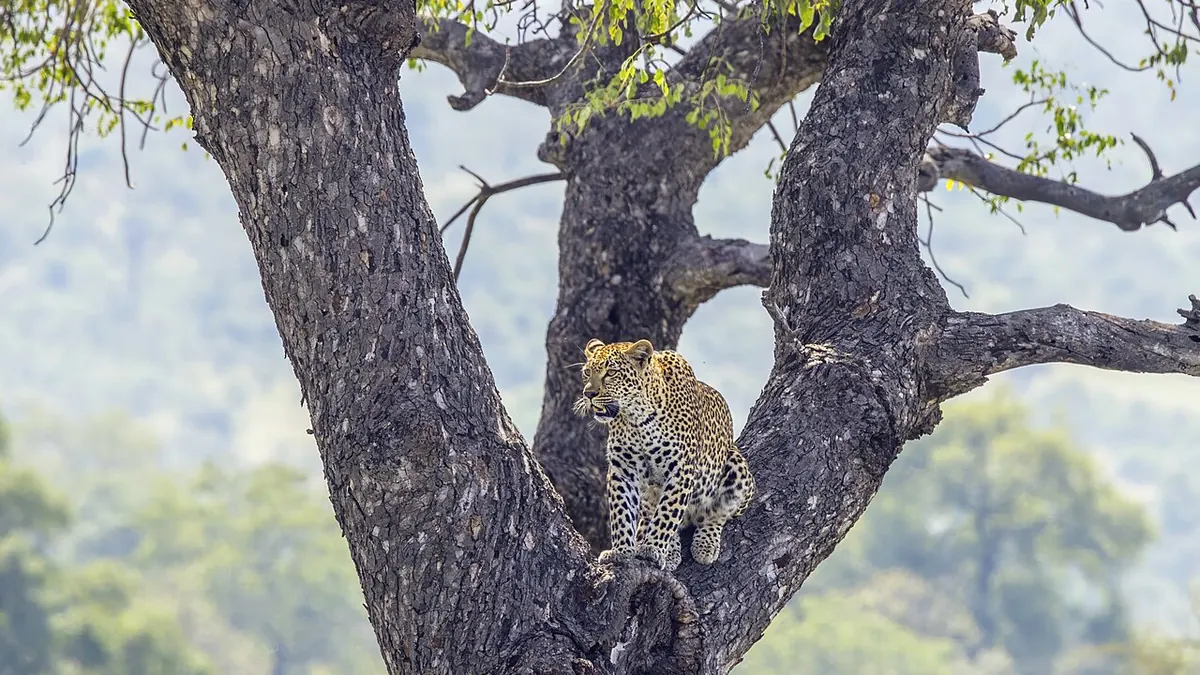
Driving rules in Kruger require staying in the vehicle, keeping to marked roads and observing the 50 km/h tar and 40 km/h gravel limits. Visitors may leave the vehicle only at designated picnic spots, viewpoints and inside camps.
- Never feed animals, and keep windows up near lions and elephants
- Give elephants space and reverse slowly if a herd approaches
- Drive on the left
- Fuel up at main camps; keep at least half a tank
- Mobile signal is patchy, so save offline maps
- Do not leave belongings visible in parked cars outside the park
When is the best time of year for self-drive in Kruger?
The best time for self-drive in Kruger is the dry winter from about May to September, when thin bush and few water sources make animals easier to see. Summer is hot and green with more birds and baby animals but harder viewing.
| Season | Months | Notes |
|---|---|---|
| Dry winter | May to Sep | Best sightings, cold mornings |
| Transition | Oct | Hot, animals at rivers |
| Wet summer | Nov to Mar | Lush, hot, harder sightings |
Kruger lies in a malaria area, so consult a travel-medicine clinic in Israel before the trip.
How do you reach Kruger from Israel?
Reach Kruger from Israel by flying to Johannesburg with a connection and then driving or flying to the park area. A direct Tel Aviv-Johannesburg flight should not be assumed, so check current schedules.
- Flight: Tel Aviv to Johannesburg (OR Tambo) with a connection, for example via Addis Ababa or Istanbul
- Road: roughly 4.5 to 6 hours from Johannesburg to the southern gates
- Air: scheduled flights serve Skukuza and Hoedspruit airports
- Entry: check South Africa's official entry rules for Israeli passport holders
- Warnings: read the Israeli National Security Council (NSC) and Foreign Ministry notices
Kosher food is not available inside Kruger. Contact the Johannesburg Jewish community or a local Chabad house, and carry shelf-stable food for park days.
What are common mistakes on a Kruger self-drive trip?
The common mistakes are rushing between camps, leaving too late in the morning and misjudging gate closing times. A slower pace with fewer distance targets produces better sightings.
- Driving more than about 100 km between camps in one day
- Starting after the morning peak activity
- Not booking night drives early enough
- Assuming mobile signal and fuel are available everywhere
- Leaving the car at unmarked spots
Fixing these usually means cutting one stop. Two nights in the same camp, such as Lower Sabie and Satara in this plan, remove packing time and leave full mornings for the best light. Extending to 7 days works by adding a second night at Skukuza or a northern stay at Olifants or Letaba.
FAQ
How many days do you need for a Kruger self-drive?
Three full days in the park is a good minimum, and five days allows two stops in the south and two on the central plains without rushing. Shorter stays cover one section only, since the park is about 350 km long.
Which route is best for a first-time self-drive in Kruger?
A south-to-central route through Crocodile Bridge, Lower Sabie, Skukuza and Satara is the most popular for first-timers. It combines river wildlife, rhino country and open plains, with services at each camp and short driving distances each day.
Can you drive a normal rental car in Kruger?
Yes. Tarred main roads and most marked gravel roads are fine for a normal rental sedan in dry weather. A higher-clearance vehicle gives a better view and handles rougher gravel loops, but is not required for the 5-day route.
What is the speed limit in Kruger National Park?
The limit is 50 km/h on tarred roads and 40 km/h on gravel roads. Visitors must remain in the vehicle except at designated picnic sites, viewpoints and inside rest camps, and must reach a camp or gate before it closes.
Do you need to book Kruger camps in advance?
Yes. Rest camps are booked through SANParks, and popular camps such as Satara, Lower Sabie and Skukuza fill months ahead for school holidays and winter. Night drives and bush walks also have limited places and should be booked together with accommodation.
Is there a direct flight from Israel to Kruger?
No direct flight should be assumed. The usual route is a connecting flight from Tel Aviv to Johannesburg, followed by a drive of roughly 4.5 to 6 hours or a domestic flight to Skukuza or Hoedspruit. Check current schedules.